

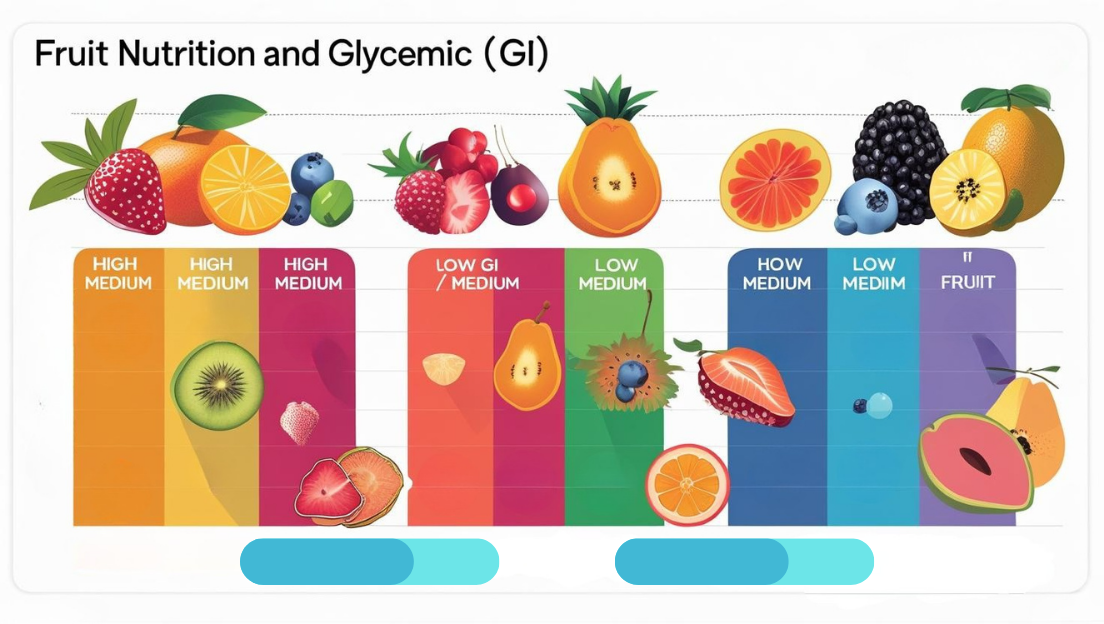
The Ultimate Indian Fruits Nutrition Guide (GI, Carbs & Health)
Ever felt confused about fruits? You hear they’re healthy, but then someone warns you about the sugar. This is especially true when you’re trying to manage diabetes, blood pressure, or a weight loss goal. India’s amazing variety of fruits—from sweet mangoes to tangy amla—can feel like a puzzle.
This simple guide is here to clear up that confusion. We’ll break down the most popular Indian fruits by their nutrition facts, focusing on what matters most: the Glycemic Index (GI), carbohydrate content, and their real benefits for your health. Let’s help you choose wisely!
What Is the Glycemic Index (and Why Does It Matter)?
The Glycemic Index (GI) is a simple 0-100 scale. It measures how quickly a food containing carbs raises your blood sugar levels after you eat it. Think of it like fuel for your body:
- Low GI (55 or less): These are ‘slow-burn’ fuel. They digest slowly, causing only a gradual rise in blood sugar. They are ideal for sustained energy and blood sugar management.
- Medium GI (56-69): These are in the middle and have a moderate effect.
- High GI (70 or more): This is ‘quick-spark’ fuel. They digest fast, causing a rapid spike (and often a crash) in blood sugar.
How GI Impacts Your Health Goals
Choosing low-GI foods, especially low-GI fruits, is a smart strategy for several key reasons:
- Diabetes Management: If you have type 1, type 2, or pre-diabetes, low-GI foods are your best friend. They help maintain stable blood sugar, avoiding those risky spikes and dips. Fruits like guava, apples, and berries (jamun) are excellent choices.
- Weight Control: Low-GI foods are very often high in fiber. This powerful combination helps you feel full longer (the feeling of “satiety”), which can naturally reduce your overall calorie intake and support your weight management goals.
- Heart Health: A diet rich in low-GI, high-fiber foods has been consistently linked to better heart health, often by helping to improve insulin sensitivity and cholesterol levels.
Indian Fruits Nutrition Chart: GI, Carbs, and Benefits
Here’s the at-a-glance guide you’ve been looking for. We’ve compiled 30 popular Indian fruits with their Hindi names, GI values, carbs (per 100g), and suitability for managing diabetes, blood pressure, and weight.
| Fruit Name | Hindi Name | GI Value | Carbs (per 100g) | Seasonal Availability | Diabetes Suitability | BP Suitability | Weight Control |
|---|---|---|---|---|---|---|---|
| Apple | सेब (Seb) | 36–40 | 10.4g | Aug–Nov | Low (All) | Yes | Yes |
| Banana | केला (Kela) | 51–55 | 12.2g | Year-round | Medium (All) | Yes | Moderate |
| Mango | आम (Aam) | 51–56 | 14.8g | Apr–Jul | High (All) | Moderate | No |
| Orange | संतरा (Santra) | 40–45 | 8.2g | Oct–Mar | Low (All) | Yes | Yes |
| Grapes | अंगूर (Angoor) | 43–53 | 16.3g | Feb–Apr, Sep | High (All) | Moderate | No |
| Pineapple | अनानास (Ananas) | 59–66 | 16.3g | Mar–Jul | High (All) | Moderate | No |
| Watermelon | तरबूज (Tarbooj) | 72 | 6.2g | Mar–Jun | High (All) | Yes | Yes |
| Papaya | पपीता (Papita) | 60–65 | 8.3g | Year-round | Medium (All) | Yes | Yes |
| Guava | अमरूद (Amrud) | 14–20 | 5.4g | Oct–Mar | Low (All) | Yes | Yes |
| Pomegranate | अनार (Anar) | 53 | 9.2g | Sep–Mar | Medium (All) | Yes | Moderate |
| Strawberry | स्ट्रॉबेरी | 40 | 4.9g | Dec–Mar | Low (All) | Yes | Yes |
| Blueberry | ब्लूबेरी | 40 | 9.9g | Dec–Mar | Low (All) | Yes | Yes |
| Blackberry | जामुन (Jamun) | 25–30 | 4.9g | Jun–Aug | Low (All) | Yes | Yes |
| Kiwi | कीवी (Kiwi) | 47–53 | 9.2g | Nov–Jan | Low–Medium (All) | Yes | Yes |
| Apricot | खुबानी | 34 | 9.2g | May–Jul | Low (All) | Yes | Yes |
| Plum | आलूबुखारा | 39 | 9.9g | Jun–Aug | Low (All) | Yes | Yes |
| Peach | आड़ू (Aadu) | 42 | 8.4g | Jul–Aug | Low (All) | Yes | Yes |
| Coconut | नारियल (Nariyal) | 42 | 6.2g | Year-round | Low (All) | Yes | Moderate |
| Lemon | नींबू (Nimbu) | 20 | 2.5g | Year-round | Low (All) | Yes | Yes |
| Pear | नाशपाती | 38–42 | 9.8g | Aug–Oct | Low (All) | Yes | Yes |
| Lychee | लीची (Lychee) | 50–55 | 16.5g | May–Jul | High (All) | Moderate | No |
| Cherries | चेरी (Cherry) | 22 | 8.0g | May–Jul | Low (All) | Yes | Yes |
| Starfruit | कमरख (Kamrakh) | 23 | 4.2g | Sep–Apr | Low (All) | Yes | Yes |
| Custard Apple | शरीफा (Sharifa) | 54–60 | 14.3g | Sep–Dec | Medium–High (All) | Moderate | No |
| Fig | अंजीर (Anjeer) | 51–61 | 16.3g | Jun–Sep | High (All) | Moderate | No |
| Gooseberry | आंवला (Amla) | 15–20 | 4.4g | Oct–Mar | Low (All) | Yes | Yes |
| Grapefruit | चकोतरा | 25 | 6.9g | Nov–Mar | Low (All) | Yes | Yes |
| Muskmelon | खरबूजा | 65 | 8.0g | Apr–Jun | Medium–High (All) | Yes | Yes |
| Jackfruit | कटहल (Kathal) | 50–60 | 23.0g | May–Jul | High (All) | Moderate | No |
| Avocado | मक्खनफल | 15 | 9.0g | Jul–Sep | Low (All) | Yes | Yes |
Beyond the GI: A Whole-Health Look at Fruits
The Glycemic Index is a vital tool, but it’s not the whole story. Here’s what else to consider when choosing the best fruits for you.
Fruits for Blood Pressure Management
Here’s some great news: most fruits are fantastic for managing blood pressure. They are naturally low in sodium and, more importantly, high in potassium. Potassium is a mineral that helps relax your blood vessels and balances out the negative effects of sodium. Look for potassium-rich heroes like bananas, oranges, muskmelon, and guava to support your heart health.
Fruits for Weight Control
When weight management is your goal, think low-calorie and high-fiber. These fruits fill you up without filling you out. Options like watermelon, strawberries, and lemons are ideal because their high water content adds volume and helps you feel full. What about higher-calorie fruits like mangoes or bananas? They are still packed with nutrients! The key is simply enjoying them in controlled portions.
The Power of Eating Seasonally
Why does “seasonal” matter so much? Eating fruits that are in-season means you’re getting them at their absolute peak of freshness, with the highest nutritional value and best taste. Think of those juicy mangoes in the summer and sweet, fresh oranges in the winter. It’s nature’s way of giving you the best, and it’s often more affordable, too!
Choose Your Fruits Wisely, Not Fearfully
India’s incredible bounty of fruits is a gift, not something to be afraid of. By understanding simple concepts like the Glycemic Index and carb content, you can make empowered, confident choices that fit your unique health goals—whether that’s managing diabetes, lowering blood pressure, or maintaining a healthy weight.
Remember, balance and portion control are always key. Even a higher-GI fruit like watermelon can be part of a healthy diet when enjoyed in moderation.
Ready to build a complete healthy eating plan? Take all the guesswork out of your diet. Try our AI-Powered Diet Chart generator. It creates a balanced meal plan tailored specifically to your health needs. Start your personalized health journey today!
Health Disclaimer: This blog provides informational content only and is not a substitute for professional medical advice. Always consult with your doctor or a qualified healthcare provider for advice tailored to your specific health condition.