


Magnesium vs. Melatonin for Sleep: Is There a Better Ayurvedic Choice?
Tossing and turning? If you’re struggling to get a good night’s sleep, you’ve probably seen the two most common recommendations: melatonin and magnesium.
They’re in every chemist and all over the internet. But here’s the tough question: if they work so well, why are so many people still tired?
The truth is, while melatonin and magnesium can help, they often act as temporary patches. They don’t always address the root cause of sleeplessness for many people in India—chronic stress. Let’s break down this “sleep showdown” and explore a holistic, Ayurvedic alternative that works differently.
First, What’s the Difference: Melatonin vs. Magnesium?
Before we compare, let’s understand what these two popular supplements actually do.
H3: Melatonin: The “Time-to-Sleep” Hormone
Think of melatonin as your body’s internal clock-setter. It’s a hormone your brain produces in response to darkness, signaling that it’s time to sleep.
- Best For: Resetting your sleep schedule. It’s helpful for jet lag or adjusting to a new shift-work pattern.
- The Catch: Melatonin tells you it’s time for bed, but it doesn’t make you sleep. It’s not very effective if your mind is racing with anxiety. Long-term use can also lead to dependency and that all-too-common next-day “melatonin hangover” or grogginess.
H3: Magnesium: The “Body Relaxer” Mineral
Magnesium is an essential mineral involved in over 300 bodily functions. For sleep, its main job is to calm the nervous system.
- Best For: Easing physical tension. It helps activate GABA, a calming neurotransmitter, and can relax tense muscles. It’s great if you feel physically restless.
- The Catch: Magnesium is a relaxer, not a sleep-inducer. It won’t do much for a racing mind or hormonal imbalances. Plus, taking enough to impact sleep (especially in forms like magnesium citrate) can often lead to digestive upset.
The Missing Piece: Why Aren’t They Working?
Here’s the scenario: You take melatonin, but your mind is still listing tomorrow’s tasks. Or you take magnesium, but you’re still wired with stress.
The problem is cortisol—the stress hormone. When you’re chronically stressed, your cortisol levels stay high, even at night. This high-alert state overrides melatonin’s “sleep” signal and keeps your muscles tense no matter how much magnesium you take. You’re not just tired; you’re tired and wired.
A Holistic Alternative: The Ayurvedic Approach with RelaxTagara
This is where Ayurveda’s 5,000-year-old wisdom shines. Instead of just targeting one symptom (like sleep timing or muscle tension), the Ayurvedic approach aims to rebalance the entire system by tackling the root cause: stress.
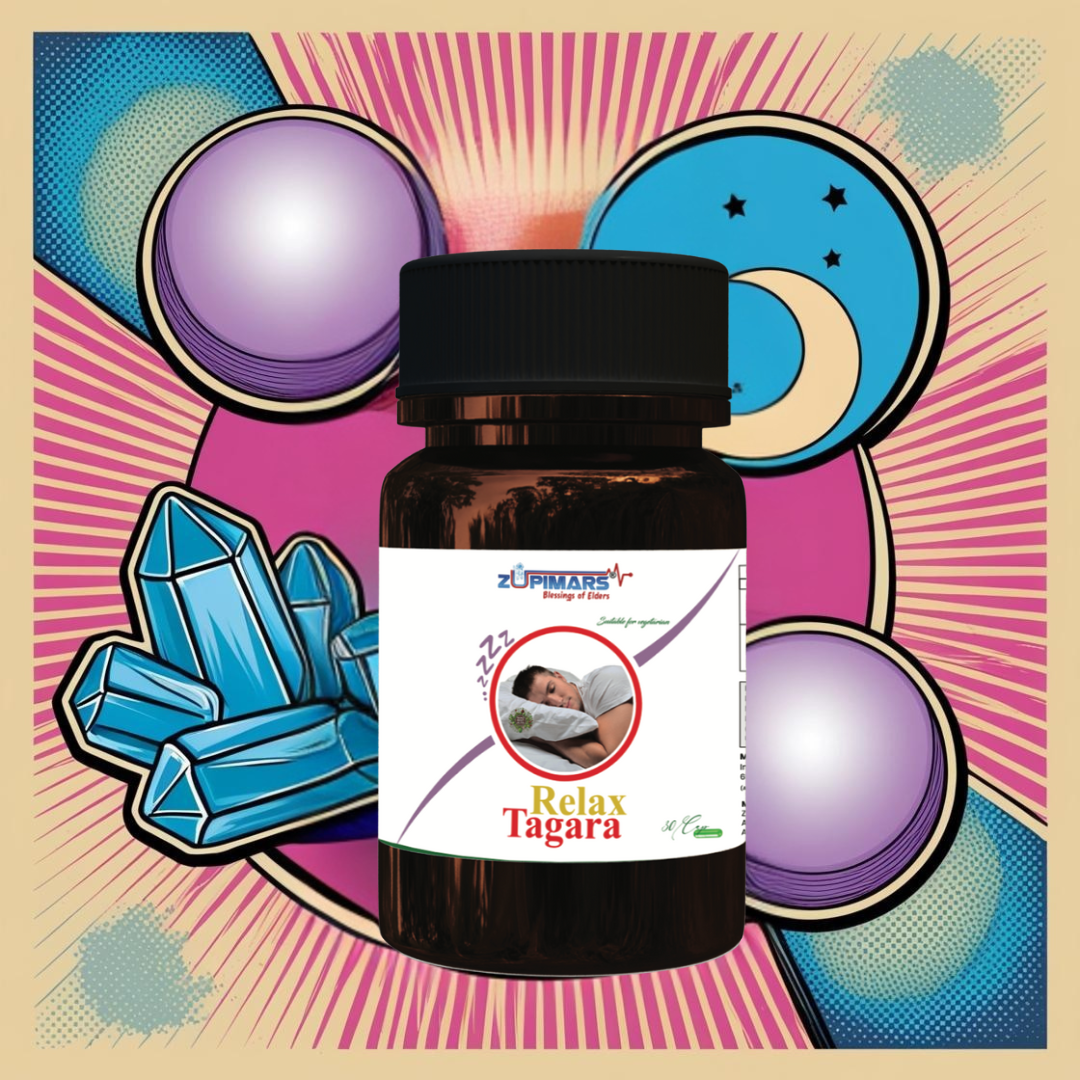
This is the principle behind RelaxTagara. It isn’t a single ingredient; it’s a synergistic, non-habit-forming blend of potent herbs designed to calm your mind and body.
H3: How RelaxTagara Works Differently
Instead of forcing sleep, RelaxTagara helps create the ideal conditions for it. Its power comes from its key ingredients:
- Ashwagandha: This is the star player. As a powerful adaptogen, Ashwagandha is clinically shown to help reduce cortisol levels, directly fighting the “tired and wired” feeling so your body can finally obey its natural sleep signals.
- Tagara (Indian Valerian): A classic Ayurvedic herb known for its sedative properties. It helps calm the mind and reduce the time it takes to fall asleep, without the “hangover” effect.
- Brahmi: Often called the “herb of grace,” Brahmi is renowned for reducing anxiety and stopping the mental chatter that keeps you staring at the ceiling.
- Jatamansi: This herb helps to balance your mood and promotes a sense of peace, helping you not only fall asleep but stay asleep.
The Showdown: At a Glance
Here’s a simple breakdown of how these three stack up against each other.
| Feature | Melatonin | Magnesium | RelaxTagara (Ayurvedic) |
|---|---|---|---|
| Main Action | Signals sleep timing | Relaxes muscles & nerves | Reduces stress & calms the mind |
| Best For | Jet lag, shift work | Muscle tension, restlessness | Stress-induced insomnia, anxiety |
| Key Drawback | Grogginess, dependency | Digestive issues, not a sedative | Requires consistency (herbal) |
| Habit-Forming? | Potentially | No | No |
The Clear Winner for Sustainable Sleep
While melatonin and magnesium have their places for short-term issues, they aren’t a long-term solution for stress-induced sleeplessness.
If you’re tired of lying awake with a racing mind, or if you fall asleep only to wake up a few hours later, your body isn’t asking for a sleep signal—it’s asking for stress relief.
RelaxTagara offers a comprehensive, side-effect-free, and non-habit-forming solution. It addresses the root cause by calming your nervous system, balancing stress hormones, and allowing your body to enter a state of deep, natural rejuvenation.
Stop chasing sleep and start managing stress. Your body knows how to do the rest.
—
Ready to experience the difference a calm mind can make? Learn more about our RelaxTagara Ayurvedic Sleep Formula today.