


What is the Charaka Samhita? A Guide to Ayurveda’s Foundational Text
If you’ve ever explored the world of Ayurveda, you’ve likely heard the name Charaka Samhita. But what exactly is it? In short, it’s not just an old book; it’s considered the foundational encyclopedia of Ayurvedic medicine. This ancient Sanskrit text is a cornerstone of holistic wellness, offering profound insights that are still incredibly relevant today.
Its wisdom, compiled over 2,000 years ago by the sage Charaka, isn’t just about treating illness. It’s a complete guide to life that addresses the mind, body, and spirit as one interconnected whole.
Before diving into this specific text, if you’re new to the core concepts, you might want to learn more about what Ayurveda is in our foundational guide.
Why is This Ancient Text Still So Important?
The Charaka Samhita’s enduring legacy comes from its incredibly comprehensive and systematic approach. It’s revered because it was one of the first texts to champion a truly **holistic view of health**.
It goes far beyond symptoms and cures. The text details the importance of:
- Personalized diet and nutrition
- Daily and seasonal routines (Dinacharya and Ritucharya)
- Mental well-being and ethics
- Preventive care to maintain balance
It treats the individual, not just the disease, laying the groundwork for the personalized medicine that Ayurveda is famous for.
A Look Inside: The 8 Sections (Sthanas) of Charaka Samhita
The entire text is masterfully organized into eight distinct sections, or Sthanas, which are further divided into 120 chapters. Each section covers a specific aspect of medicine, building a complete framework for healers.
1. Sutrasthana (Section on Principles)
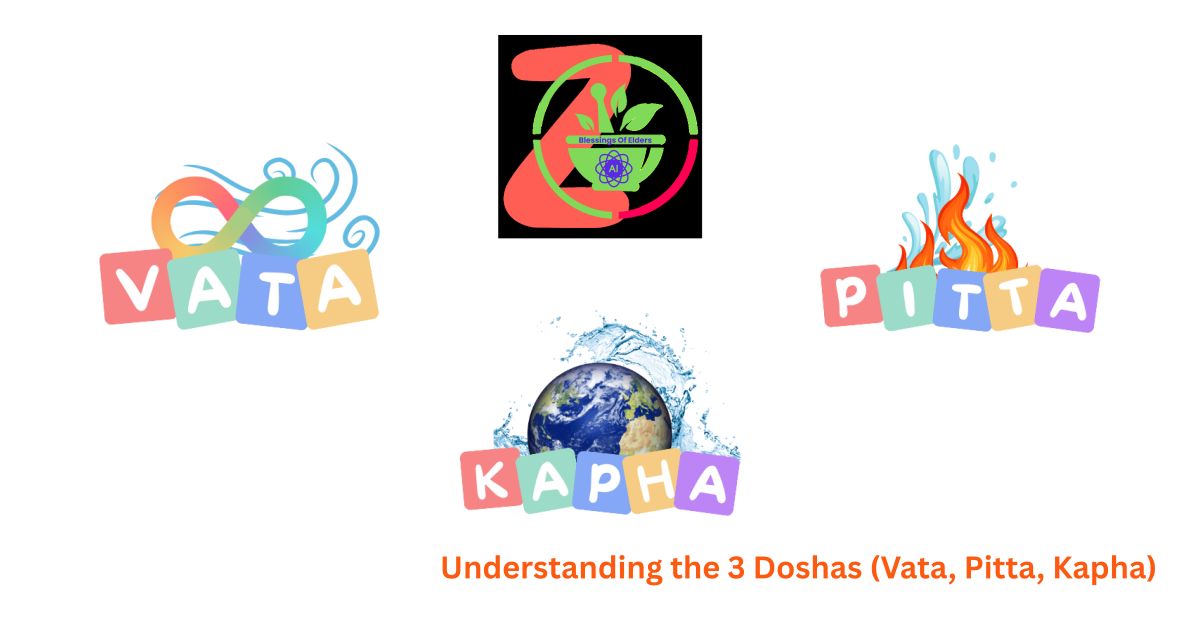
Think of this as the ‘Foundation’ or ‘Getting Started’ guide. Its 30 chapters cover the fundamental principles of Ayurveda: the origins of medicine, core philosophies, and the importance of diet, lifestyle, and prevention. This is where the text introduces the core concepts of the three Doshas. (Curious? You can explore the Vata, Pitta, and Kapha doshas in our detailed guide).
2. Nidanasthana (Section on Diagnosis)
This section of 8 chapters is the ‘Pathology’ guide. It focuses entirely on why we get sick, detailing the causes, signs, and symptoms of major diseases. It teaches practitioners how to diagnose an illness by understanding its root cause.
3. Vimanasthana (Section on Specifics)
With 8 chapters, this section deals with ‘Specific Determinations.’ It discusses how to measure and differentiate the doshas, the qualities of different foods, and how to personalize treatment. It also outlines the qualities of an ideal physician and the ethics of healing.
4. Sharirasthana (Section on Anatomy)
This 8-chapter section is the ‘Anatomy’ manual. It describes the human body, not just physically (organs and tissues) but also energetically (the flow of prana or life force). It also covers embryology and the connection between the physical and subtle bodies.
5. Indriyasthana (Section on Prognosis)
This fascinating 12-chapter section is all about ‘Sensory Prognosis.’ It explains how a practitioner can use the five senses to observe a patient—noting changes in their voice, smell, color, and touch—to predict the course of an illness and its likely outcome.
6. Chikitsasthana (Section on Therapeutics)
This is the heart of the text and the largest section, with 30 chapters. It’s the complete ‘Treatment’ guide, providing detailed therapeutic strategies, herbal formulas, and rejuvenation therapies (like Rasayana) for a vast range of diseases, from fever to infertility.
7. Kalpasthana (Section on Pharmaceutics)
This 12-chapter section is the ‘Pharmacology’ book. It provides precise instructions on how to prepare and administer medicines (Kalpas), particularly for detoxification procedures like Panchakarma. It also covers toxicology and the management of poisons.
8. Siddhisthana (Section on Success)
The final 12-chapter section focuses on ‘Successful Treatment.’ It provides guidelines for managing complications, ensuring the treatment is effective, and achieving complete wellness. It’s the ultimate guide to restoring harmony and “success” in healing.
What Can We Learn from the Charaka Samhita Today?
This ancient text isn’t just for history buffs or Ayurvedic scholars. Its principles offer timeless wisdom for anyone seeking a healthier, more balanced life in the modern world.
Here’s what it teaches us:
- Health is Holistic: You cannot separate your mind from your body, or your body from your environment. True wellness involves all three.
- Prevention is the Best Cure: The text places enormous emphasis on daily routines, seasonal habits, and diet to prevent disease from ever taking root.
- You Are Unique: The Charaka Samhita champions personalized care. It teaches that the path to health is different for everyone, based on their unique constitution (Prakriti).
A Timeless Journey to Wellness
The Charaka Samhita is far more than a medical text; it’s a profound guide to living a long, healthy, and harmonious life. Its teachings have survived for millennia precisely because they work.
By understanding its core message—that balance, prevention, and personalized care are the keys to health—we can all borrow a piece of this ancient wisdom to improve our modern lives.