

AI in Ayurveda: How Technology is Unlocking the Secrets of Charak Samhita
The New Synergy: Ancient Wisdom Meets Modern Tech
It might seem like a paradox: a 5,000-year-old healing system meeting the newest in digital technology. Yet, this is exactly what’s happening. Ayurveda, the ancient “science of life,” is experiencing a powerful renaissance, and the catalyst is Artificial Intelligence (AI).
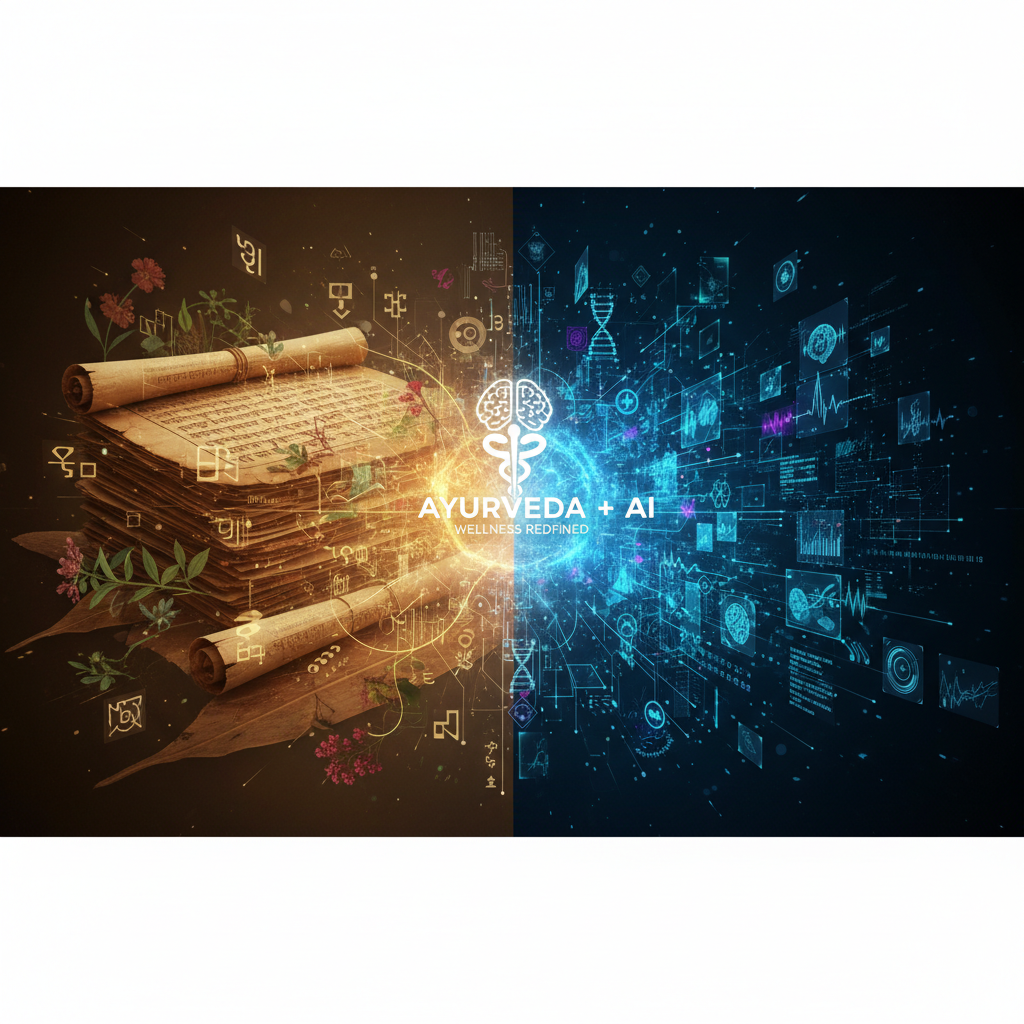
This convergence of ancient tradition and modern innovation is vital for addressing today’s complex healthcare needs. The Charak Samhita, a foundational Ayurvedic text, stands as a beacon of timeless medical wisdom. Now, through AI and computer vision, its core principles are being decoded and applied in ways previously unimaginable. This fusion is transforming how we understand health, paving the way for truly personalized, precise, and predictive wellness.
The Bedrock of Wisdom: What is the Charak Samhita?
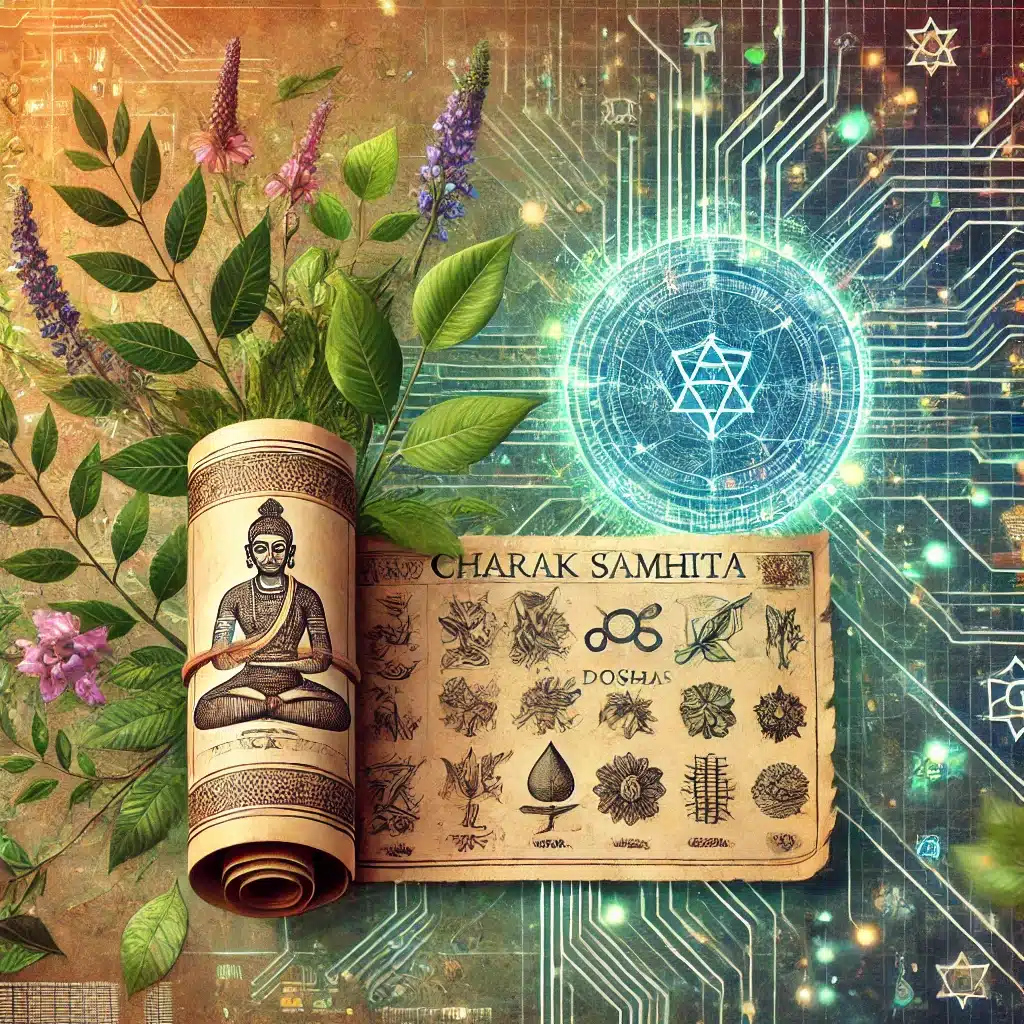
The Charak Samhita is a monumental text that forms the bedrock of Ayurvedic medicine. Its brilliance lies in its holistic approach, viewing the balance of body, mind, and spirit as the foundation of health. It provides a comprehensive framework for disease prevention, diagnostics, and herbal formulations tailored to an individual’s unique constitution.
The Origins of a 5,000-Year-Old Medical Text
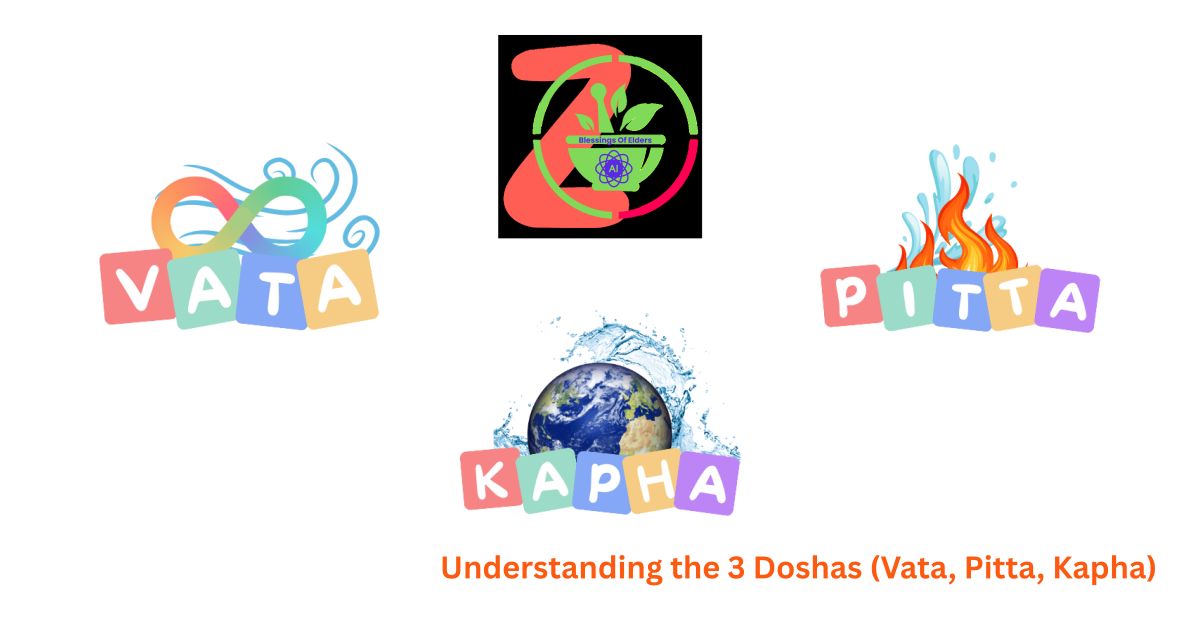
Attributed to the sage Charaka, this ancient text outlines detailed theories on health and disease. It emphasizes the importance of balance among the three fundamental bio-energies, or doshas: Vata, Pitta, and Kapha. Its time-tested healing practices have remained relevant for millennia, guiding practitioners in promoting long-term health, not just treating symptoms.
Key Principles: Doshas, Prakriti, and Personalized Health
At the heart of the Charak Samhita is the concept of Prakriti, an individual’s unique
bio-constitution. This concept dictates that all treatment, diet, and lifestyle plans must be personalized. The text explains how imbalances in the doshas (known as Vikriti) manifest as illness and highlights the critical role of diet and lifestyle in maintaining equilibrium.
The Modern Tools: Defining AI and Computer Vision in Health
Artificial intelligence and computer vision are no longer science fiction; they are transformative forces in modern healthcare, enabling capabilities that enhance human expertise.
Introduction to AI in Digital Health
Artificial intelligence, and its subset machine learning, allows computers to process and analyze vast amounts of data, learn from patterns, and make highly accurate predictions. In digital health, AI is used to analyze medical records, discover new drug formulations, and provide personalized treatment recommendations, revolutionizing patient outcomes.
The Power of Computer Vision in Diagnostics
Computer vision is a field of AI that gives machines the power to “see” and interpret visual data. In medicine, it’s used to analyze medical images (like X-rays or MRIs), track subtle physiological changes, and detect diseases—sometimes with more accuracy than the human eye.
Where Ancient Text Meets Modern Tech: AI’s Role in Ayurveda
The true revolution begins when we apply modern data science to ancient wisdom. The integration of AI with Ayurvedic principles is unlocking new, data-driven insights from the Charak Samhita, bridging the gap between qualitative tradition and quantitative precision.
Decoding Ancient Formulations with AI
Much of the Charak Samhita’s knowledge is qualitative. AI’s natural language processing can perform a deep semantic analysis of the text, extracting hidden patterns and correlations. This translates ancient teachings into actionable, evidence-based information for modern practitioners. This data-driven approach is also being explored by major research institutions, such as in studies published by the NIH exploring AI’s role in analyzing traditional medicine.
Precision Diagnostics: What Computer Vision ‘Sees’
Computer vision adds a new layer of precision to traditional Ayurvedic diagnostics. By analyzing physiological markers, it can enhance practices like pulse diagnosis (Nadi Pariksha) and tongue diagnosis (Jihva Pariksha) by providing real-time, high-resolution analysis of patterns that might be too subtle for human perception alone.
From Ancient Herbs to Precision Medicine: AI in Formulation
Perhaps the most exciting application is in creating personalized herbal formulations. AI takes the core Ayurvedic principle of personalization to an entirely new level.
Tailored Herbal Solutions, Powered by Data
AI algorithms can analyze vast datasets—including a patient’s doshic imbalance, Prakriti, lifestyle, and environmental factors—to recommend the optimal combination and dosage of herbs. This moves beyond a one-size-fits-all approach to create truly precision medicine tailored to the individual’s exact needs.
Objective Dosha Diagnosis with Machine Learning
Machine learning models can be trained on thousands of data points (including pulse, tongue, facial, and patient-reported symptoms) to identify complex patterns related to doshic imbalances. This leads to a more accurate, objective diagnosis, which forms the basis for any effective Ayurvedic treatment and improves long-term patient outcomes.
A Deeper Look: Computer Vision in Ayurvedic Practice
Computer vision is providing practitioners with “superpowers,” allowing them to see and track health clues in real-time.
Nadi Pariksha (Pulse Diagnosis) Reimagined
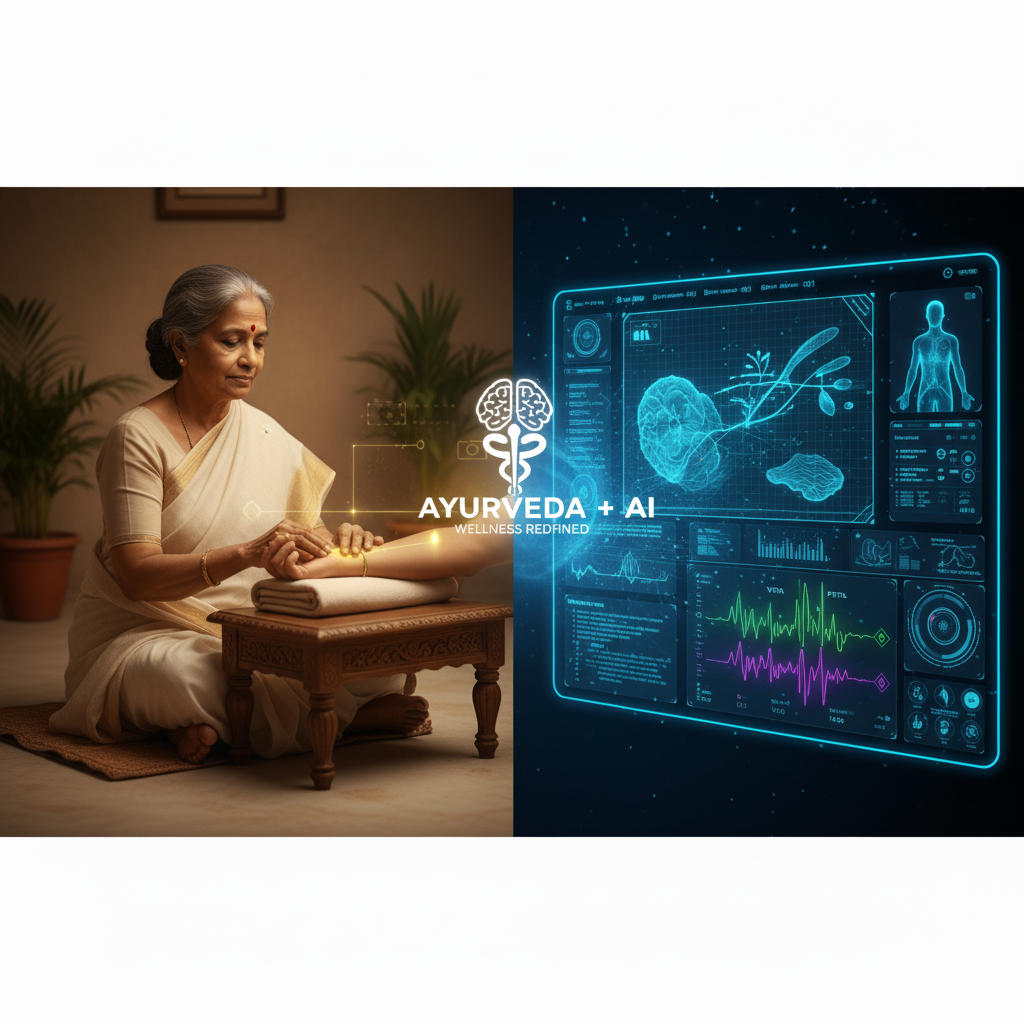
Nadi Pariksha (pulse diagnosis) is a cornerstone of Ayurvedic assessment. Traditionally, a practitioner feels the pulse to determine doshic balance. Computer vision, often through specialized sensors, can capture and analyze minute variations in pulse waveforms, offering a detailed, objective map of the body’s inner workings and validating the practitioner’s findings.
Jihva Pariksha (Tongue Analysis) and Facial Scanning
Ayurveda has long used facial and tongue analysis to detect imbalances. Computer vision can analyze facial skin tone, eye characteristics, and tongue texture in real-time, cross-referencing these visual cues with Ayurvedic texts to provide instant feedback on potential health issues and doshic shifts.
The Human Touch: Challenges and Ethical Guardrails
While this fusion is promising, it’s essential to proceed with awareness. The goal is to enhance, not replace, the ancient wisdom of Ayurveda.
- Balancing Wisdom and Technology: We must ensure that the nuanced, holistic essence of Ayurveda is preserved and not diluted by purely quantitative data.
- Ethical AI: As with any AI in healthcare, addressing data privacy, patient consent, and potential algorithmic bias is critical to ensure these tools are fair and beneficial for everyone.
- The Role of the Practitioner: These AI tools are designed to support, not replace, the skilled Ayurvedic practitioner. The human element of care, empathy, and intuitive wisdom remains irreplaceable. (We recommend reading our post on the importance of a holistic consultation.)
The Future of Wellness: Predictive Ayurvedic Care
The intersection of the Charak Samhita and AI is paving the way for a future where healthcare is not only personalized but also predictive. AI-powered tools will help practitioners and individuals detect potential imbalances before they manifest as disease. This shifts the focus from treatment to true prevention—a core goal of Ayurveda.
This new generation of technology will empower practitioners, make Ayurvedic medicine more accessible globally, and validate its profound principles with modern, data-driven evidence.
A New Synergy for Timeless Health
The synergy between the Charak Samhita and artificial intelligence is more than just an innovation; it’s a revolution in healthcare. By integrating ancient wisdom with cutting-edge technology, we are unlocking a new paradigm of medicine—one that is predictive, personalized, and profoundly holistic.
As we embrace this future, the potential for AI in Ayurveda to redefine and elevate wellness is limitless, offering a powerful pathway to health and longevity.
Ready to see how this blend of ancient wisdom and modern precision can support your health goals? Explore our personalized Ayurvedic solutions today.
Frequently Asked Questions (FAQ)
What is the main role of AI in Ayurvedic medicine?
AI’s main role is to enhance precision and personalization. It analyzes vast amounts of data from Ayurvedic texts (like the Charak Samhita) and patient diagnostics (like pulse and tongue analysis) to help practitioners make more accurate diagnoses and create highly customized herbal formulations.
How can AI analyze an ancient text like the Charak Samhita?
AI uses Natural Language Processing (NLP) to read, interpret, and find hidden patterns within the Charak Samhita. It can cross-reference thousands of passages on herbs, symptoms, and treatments to extract actionable, evidence-based insights that would be impossible for a human to find alone.
What is Nadi Pariksha and how does computer vision help?
Nadi Pariksha is the traditional Ayurvedic art of pulse diagnosis. Computer vision and sensor technology can digitally capture and analyze the pulse’s
subtle waveforms, providing an objective, visual map of the Vata, Pitta, and Kapha imbalances to support the practitioner’s diagnosis.
Is AI-driven Ayurveda safe and ethical?
When used as a diagnostic support tool for a qualified practitioner, AI is very safe. The ethical challenges involve ensuring patient data privacy and preventing algorithmic bias. Reputable systems are designed to augment the practitioner’s expertise, not replace the human element of care.